Why an Adult Child Living at Home Can Change Your Eligibility
An adult child under the same roof can shift household size, income counting, or both, depending on the program.
In one line
This explainer covers: When an Adult Child Counts as Part of the Household
On this page
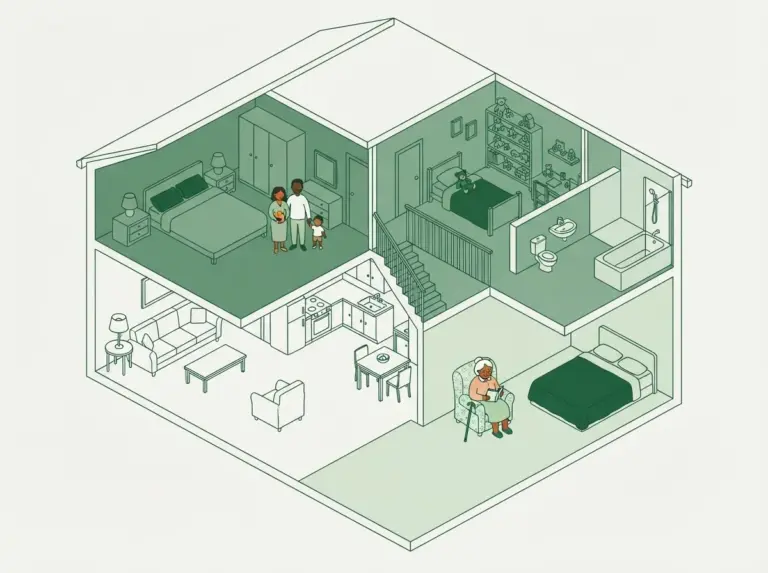
An adult child moving back home—or never having left—doesn’t automatically change anything on your benefit application. But it can, depending entirely on which test the program uses to define “household” and whether that child has income of their own. The confusion usually comes from assuming one program’s rules apply everywhere. They don’t. Some programs count the adult child as a household member and count their earnings too. Others count the person but ignore the income. Others ignore the person entirely. Knowing which category your situation falls into is the actual eligibility question, and it’s answerable before you ever fill out a form.
When an Adult Child Counts as Part of the Household
The starting question for most programs is not “who lives here” but “who is counted as a household unit under this program’s definition.” Those are different tests, and the gap between them is where most surprises happen.
Programs generally use one of three approaches:
- Tax household rules. If the program borrows its household definition from tax filing status—common with health insurance subsidy programs—an adult child counts as part of your household if you claim them as a dependent on your tax return, regardless of their age. An adult child who files their own taxes and isn’t claimed as a dependent generally forms a separate household, even if they sleep down the hall.
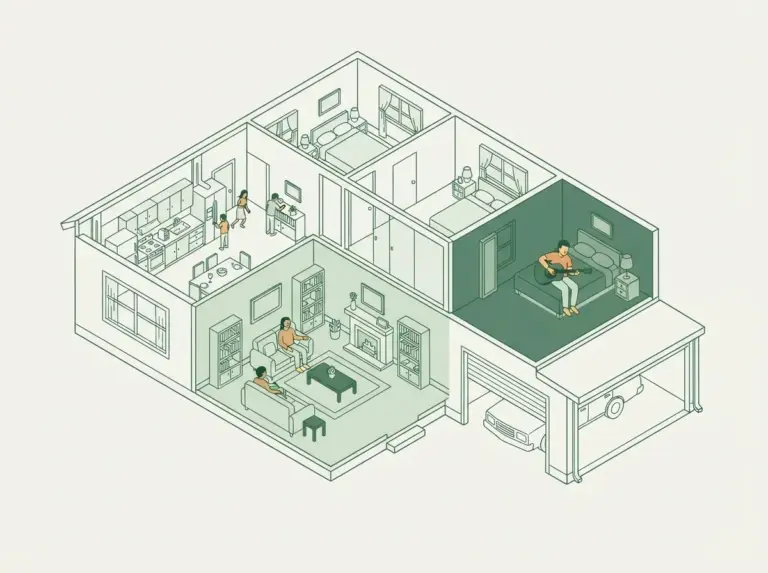
- Same-roof, shared-expenses rules. Some programs, particularly food and cash assistance programs, look at whether people living together purchase and prepare food together or share basic living expenses. Under this test, an adult child can be pulled into your household count simply by living there and sharing meals, even if they’re not your tax dependent and even if they have a full-time job.
- Legal responsibility rules. A smaller set of programs count only those the applicant has a legal obligation to support—typically minor children or a spouse. Under this narrower test, an adult child is excluded from the household count almost by default, because the legal duty of support generally ends at the age of majority.
The practical takeaway: don’t assume “household” means “everyone who lives at this address.” Find the specific definition the program uses—it’s usually stated plainly in program rules or eligibility manuals—before you guess at your household size.
Age and Status Thresholds to Check
Even within programs that use tax-household or same-roof rules, there are often carve-outs tied to the adult child’s status:
- Full-time student status, up to a certain age, sometimes preserves dependent classification even if the child has a job.
- Disability status can extend dependent or household-member classification indefinitely, past the age thresholds that would otherwise apply.
- Marriage or having their own dependents can pull an adult child out of your household count even if they still live under your roof.
These thresholds vary by program and change periodically, so check the current age cutoffs and status definitions in the program’s own eligibility materials rather than relying on what applied last year or on a different program.
How Their Income Gets Treated
If the adult child is counted as part of your household, the next question is whether their income is counted alongside yours. This is a separate test from the household-membership question, and the two don’t always move together.
Three patterns show up repeatedly:
- Full inclusion. The adult child’s income is added to household income and measured against the same threshold as everyone else’s. This is common in programs that use a single household income figure to test against a line, such as many premium subsidy calculations.
- Partial or conditional inclusion. Some programs count the income only above a certain amount, or only count it if the adult child isn’t also a full-time student, or apply an earned-income disregard that excludes a portion of wages before counting the rest.
- Exclusion despite household membership. Occasionally a program will count the person toward household size—which can help by increasing the size used to set the income threshold—while excluding their income from the calculation entirely. This combination usually helps the applicant, since a larger household size often means a higher income limit, without added income to offset it.
Because these three patterns produce very different results, it’s worth explicitly checking both boxes for any program you’re considering: does the adult child count as a household member, and separately, does their income count. Assuming one answer implies the other is the most common error in this area.
When They’re Excluded Entirely
There are clear situations where an adult child is excluded from both the household count and the income calculation, effectively treated as if they don’t live in the home for eligibility purposes:
- Separate tax filer with no dependency claim. If they file their own tax return, aren’t claimed as a dependent, and the program uses tax-household rules, they typically form their own household unit entirely apart from yours.
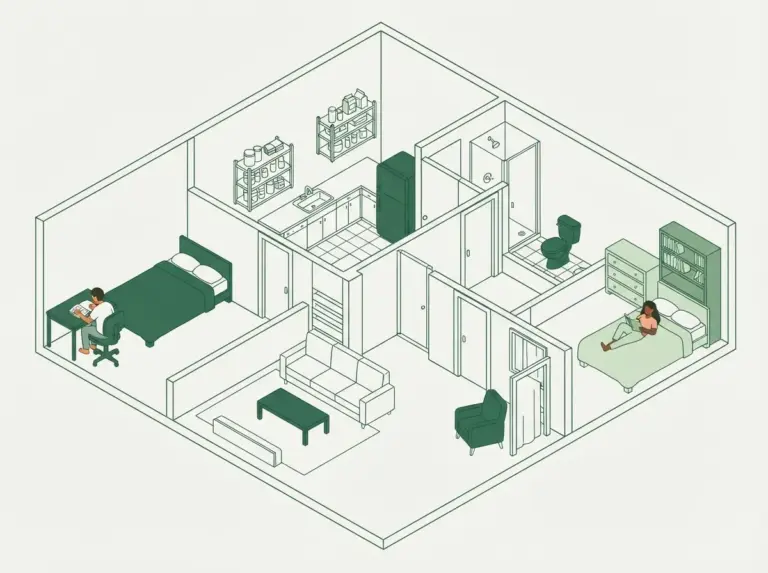
- Documented separate household within a shared residence. Some programs allow for the possibility that two households share one physical address without functioning as one economic unit—for instance, if the adult child buys and prepares their own food separately and pays a defined share of costs. This usually requires the applicant to affirmatively establish and document the separation rather than it being assumed.
- Categorical exclusions. Certain programs explicitly exclude adult children above a stated age from the household definition regardless of living arrangement or tax status, unless a disability or student exception applies.
Where exclusion is available but not automatic, the documentation burden shifts to the applicant. Expect to be asked for something that substantiates the separation—a lease, a statement of separate food purchase and preparation, or a tax return showing independent filing status. A verbal assertion that “we don’t really share expenses” is rarely sufficient on its own; the program will look for a record that matches the claim.
How This Varies by Program Type
Because the three questions—household membership, income counting, and exclusion pathways—are answered differently by different program types, it helps to think in categories rather than trying to memorize a universal rule.
- Health insurance subsidy programs generally follow tax-filing household definitions. The critical fact is whether the adult child is claimed as a dependent, not whether they live in the home.
- Food and cash assistance programs more often use the shared-living, shared-food test, which means an adult child can be pulled into the household count even without any tax relationship, based purely on the practical arrangement of the home.
- Discount programs tied to specific services—utility discounts, transit fare programs, and similar—vary widely and often use their own narrower definitions, sometimes based on legal dependency, sometimes on same-address residency with no income test at all. These are worth checking individually rather than assuming they mirror a larger federal program’s rules.
- Housing assistance programs frequently count everyone residing in the unit as part of the household for income purposes, with fewer exclusion pathways than food or subsidy programs, because the benefit itself is tied to the physical unit rather than a tax or legal relationship.
The pattern across all of these is consistent even though the outcomes differ: household definition and income counting are two separate tests, each program answers them independently, and the exclusion pathways—when they exist—usually require documentation rather than assumption. Before assuming an adult child helps, hurts, or has no effect on your eligibility, locate the specific definitions the program uses and check them against your actual living and tax arrangement, current as of the year you’re applying.