Understanding the Subsidy Cliff: What Happens Right at the Threshold
Crossing an income threshold by a small margin can change a subsidy far more than the margin itself.
In one line
This explainer covers: What a subsidy cliff actually is
On this page
What a subsidy cliff actually is
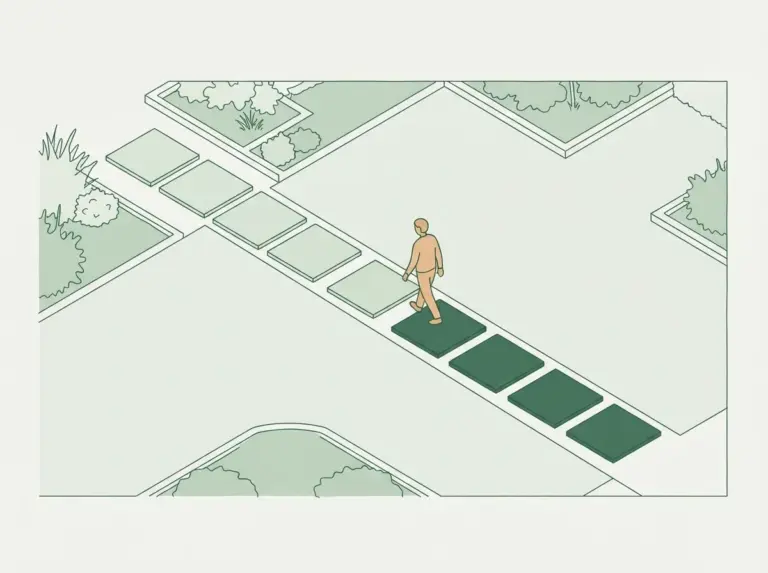
A subsidy cliff is the point where a small increase in income causes a disproportionately large drop in benefits — not a gradual reduction, but a sudden loss of eligibility altogether. The word “cliff” is doing real work here: it describes a discontinuity, not a slope. On one side of the threshold, a household qualifies for a subsidy calculated on a sliding scale. On the other side, by as little as a dollar, the household may qualify for nothing.
This is different from how most people assume benefit programs work. Many programs do taper — as income rises, the subsidy shrinks gradually, dollar by dollar or in small increments. A true cliff is different because the loss isn’t proportional to the income gain that triggered it. Earning one more dollar can mean losing a benefit worth far more than that dollar, sometimes worth thousands of dollars a year, depending on the program and how large the subsidy was to begin with.
Cliffs show up most often in programs that use a single income test — a bright-line threshold, usually expressed as a percentage of a poverty guideline or a flat income figure — to decide eligibility, rather than a formula that phases benefits out gradually. Health insurance subsidies, certain nutrition and housing programs, and some discount programs have historically used this design, though the details vary and change over time. Whether a specific program you’re considering has a cliff, a taper, or something in between is a factual question you can only answer by checking that program’s current rules, not by assuming based on how a similar-sounding program works.
Why small income changes cause large effects
The mechanism is arithmetic, not malice or poor design intent. If a program says “eligible below this income line, ineligible at or above it,” then the benefit calculation is a step function: it has one value just below the line and a different value — often zero — just above it. Nothing about the underlying need changes at that line. A household earning one dollar above the threshold is not meaningfully different from one earning one dollar below it. But the program’s output changes entirely, because the eligibility test was built as a yes/no gate rather than a continuous scale.
This creates some counterintuitive situations. A raise, a bonus, a spouse picking up extra hours, or even investment income credited in the wrong month can push a household’s countable income just over a threshold and trigger a loss of benefits that exceeds the value of the raise itself. In these cases, take-home resources after the subsidy is lost can be lower than they were before the income increase — a result sometimes called a “negative return” zone. It doesn’t happen at every threshold, and it doesn’t happen for every household near a threshold, because the size of the effect depends on how large the subsidy was and how income is counted for that specific program. But the possibility is inherent to any program that uses a hard cutoff rather than a phase-out.
It’s worth being precise about what “income” means here, because this is often where people misjudge their own position. Programs rarely use take-home pay. Many use gross income, some use a modified version of adjusted gross income, some count household size and composition into the calculation, and some count income averaged over a period rather than income at a single point in time. A household that looks like it’s safely below a threshold based on one definition of income can be over it under the definition the program actually uses. If you’re trying to gauge your distance from a cliff, the relevant number is the one defined in that program’s rules — not your paycheck, not last year’s tax return in isolation, and not a rough mental estimate.
How thresholds are set
Eligibility thresholds are not arbitrary, but they are also not universal. Most are pegged to a reference figure — commonly a federal poverty guideline, a regional income measure, or a fixed dollar amount written into a program’s statute or regulation — and then expressed as a multiple or percentage of that reference. A program might set eligibility at a certain percentage of the poverty guideline for a household of a given size, and that percentage is chosen through a policy process, not derived from any single objective formula.
Several things follow from this. First, thresholds usually update on a schedule — often annually — as the reference figures they’re pegged to are updated. This means a household’s eligibility can change year to year even if its own income hasn’t moved at all, simply because the threshold moved. Second, thresholds are frequently indexed differently across programs even when they sound similar, so “low-income” in one program’s rules may not mean the same income band as “low-income” in another. Third, household size and composition are almost always part of the calculation, so the relevant threshold for a single adult is not the threshold for a family of four, and mixing these up is a common source of confusion when people compare their situation to a number they saw somewhere else.
Because thresholds move and are program-specific, the only reliable way to know where a cliff sits for your situation is to check the current guideline for that specific program, for the current year, at your specific household size. A figure that was accurate a year ago, or that applied to a different program, is not a safe substitute.
Ways the cliff has been softened or removed
Policymakers have long recognized that hard cliffs create bad incentives — they can discourage a raise, discourage extra hours, or discourage taking a better job, because the visible effect is a net loss of resources rather than a gain. Several design approaches have been used, at various times and in various programs, to reduce or eliminate this effect:
- Phase-outs instead of cutoffs. Rather than eligibility ending abruptly, the subsidy amount is reduced gradually as income rises through a range, so there’s no single dollar that causes a sudden loss.
- Percentage-of-income caps. Some subsidy designs guarantee that a household’s cost for a benefit — insurance premiums, for example — never exceeds a set percentage of income, which smooths the transition because the subsidy adjusts continuously with income rather than switching off.
- Transitional or bridge provisions. Some programs allow a household that becomes technically ineligible to retain a reduced benefit for a limited period, cushioning the loss while the household adjusts.
- Temporary expansions or suspensions of the cliff. From time to time, legislation has removed an income cap for a subsidy program for a defined period, replacing a hard ceiling with a gradual phase-out at higher income levels. These changes are often time-limited and can expire or be renewed, so their presence in a given year is not guaranteed in the next.
None of these fixes are universal, and none are permanent by default. A program that uses a smooth phase-out today may not have used one five years ago, and may not use one five years from now. If a cliff matters to your decision — because you’re weighing a raise, a second job, or a change in household income against the risk of losing a subsidy — the responsible step is to look up how that specific program currently defines its income test: whether it’s a hard cutoff or a taper, what income definition it uses, and whether any temporary softening provision is currently in effect. That information sits with the program’s current rules, not with general descriptions of how subsidy cliffs work in the abstract.